
Buying guide
Sintered stone, solid wood or marble: choosing a family dining table
In short
If your household cooks most nights or has young children, sintered stone is usually the easier dining table top: it resists heat, stains and scratching and wipes clean, though its edges can chip under a hard knock. Solid wood is warmer and quieter and marks with use, but it can be sanded back and re-oiled, while marble has real veining but is softer, stains and etches, and needs regular sealing. Every Son&Bear dining table can be ordered with a sintered stone or a solid ash top, except the Alvi, which is solid ash only; none comes in marble.
A family dining table works hard: weeknight dinners, homework, birthday cakes, a long lunch with the grandparents. The top takes most of that wear, so it is worth choosing it for the way your family actually lives. Here is how sintered stone, solid wood and marble compare, including where each one falls short.
Which is better for a family dining table: sintered stone, solid wood or marble?
It depends on how your household uses the table.
- Sintered stone suits a family that cooks most nights, has young children or hosts often. It resists heat, stains and scratching, and most spills wipe off in one pass.
- Solid wood suits a family that wants warmth and a quieter table, and is happy for the surface to show some life. It marks, but it can be sanded back and re-oiled rather than replaced.
- Marble suits a household that loves real natural stone and is willing to look after it. Its veining is genuine, but it is softer than sintered stone, it stains and etches, and it needs sealing.
If you want a table that looks much the same after years of family dinners, sintered stone is the practical choice. If you would rather have a table you can renew completely one day, choose wood. If only genuine natural stone will do, marble is the honest answer, as long as you go in knowing the upkeep.
What is sintered stone?
Sintered stone is made from natural minerals that are pressed and fired at very high temperatures until they fuse into a dense slab. There is no resin holding it together, which is why it copes well with heat. Because it is so dense, liquids stay on the surface instead of soaking in.
How do sintered stone, wood and marble handle heat?
Sintered stone resists heat, so a warm serving dish set down is not the worry it is on wood. We would still keep a trivet on the table for a pot straight off the stove, as you would with any stone.
Solid wood is the most sensitive of the three. Hot plates and pans can leave marks in the finish, so use placemats and trivets every time.
Marble copes with warm plates, but a hot pan can mark or discolour it, so trivets are a must.
Which one stains?
Sintered stone is virtually non-porous, so soy sauce, curry, red wine and cooking oil sit on the surface until you wipe them away.
Wood depends on its finish and on how quickly you wipe. Dry spills promptly and use coasters, because a wet glass left overnight can leave a ring.
Marble is porous and reacts with acid. Lemon, vinegar, wine and tomato can leave dull etch marks even on sealed marble, and oil or turmeric can stain it once the seal has worn.
Will it scratch or chip?
Sintered stone is very hard, so everyday cutlery and toys are unlikely to scratch it, though it is still worth lifting rather than dragging a gritty pot or a rough-bottomed bowl across it. Its weak point is the edge: a hard knock from a heavy pot or the back of a chair can chip an edge or corner, and a chip can be filled but rarely disappears completely.
Solid wood scratches and dents more easily, but it does not chip in the same way, and marks can be sanded out. Son&Bear's wood tops are solid American ash, a hard, tough timber. The six finishes, from Natural Ash to Walnut and Black, are applied to that same ash, so the colour changes and the timber does not.
Marble scratches more readily than sintered stone, and its edges can chip too.
How do you look after each one?
- Sintered stone: wipe with a damp cloth, with a little mild washing-up liquid for greasy spots. Avoid bleach, solvents and scouring pads; the stone does not need them. Cut on a board, not on the table.
- Solid wood: Son&Bear's care advice is to wipe with a barely damp cloth, dry straight after, and re-oil as needed.
- Marble: wipe acids away quickly, use a pH-neutral cleaner, and reseal it as often as your supplier advises.
How do they feel, and how do they age?
Feel is the part people forget to test. Stone is cool and smooth under your forearms, and plates and cutlery sound sharper on it. Wood is warmer to the touch and quieter.
Over the years, sintered stone holds its surface and looks much as it did on the first day. Wood develops a patina and collects small marks; many families like that, and when you want a fresh start it can be sanded back and re-oiled. Marble gathers a patina of etch marks and wear, which some people love and others find frustrating; a stone specialist can re-hone it.
How do sintered stone, solid wood and marble compare side by side?
| Sintered stone | Solid wood | Marble | |
|---|---|---|---|
| Heat | Resists heat; a trivet is still a good habit | Hot dishes can mark it | Copes with warm plates; hot pans can mark it |
| Stains | Virtually non-porous; wipes clean | Wipe spills promptly | Porous; acids etch, oils can stain |
| Scratches | Resists scratching | Scratches and dents; can be sanded out | Scratches more readily |
| Chips | Edges and corners can chip under a hard knock | Dents rather than chips | Edges can chip |
| Everyday care | Damp cloth, mild soap | Barely damp cloth, dry, re-oil as needed | pH-neutral cleaner, regular sealing |
| Feel | Cool and smooth | Warm and quieter | Cool, with natural veining |
| Over the years | Looks much the same | Patina; can be refinished | Patina of etch marks; can be re-honed |
Does Son&Bear make marble dining tables?
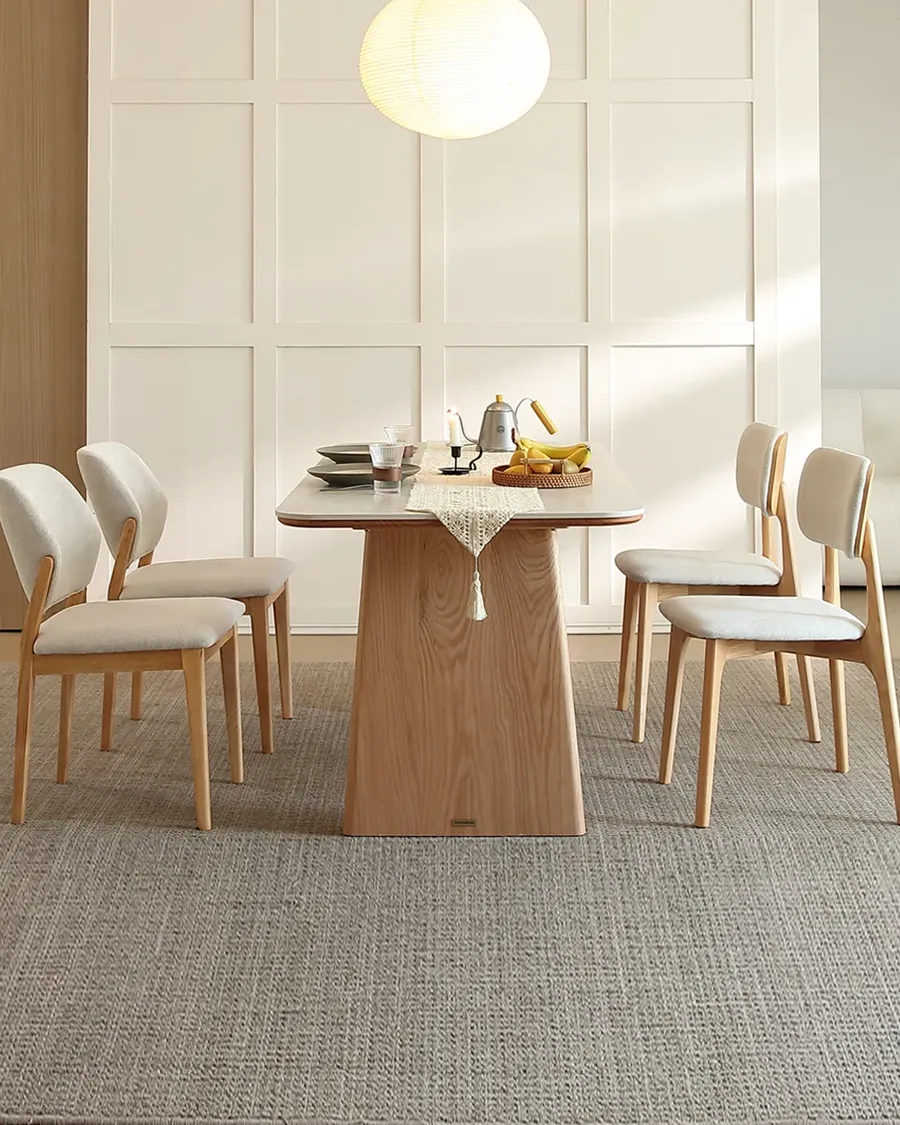
No. Son&Bear dining tables sit on a solid ash base, and every model can be ordered with a sintered stone or a solid ash top except the Alvi Extendable Dining Table, which is solid ash only. If you love the look of marble, several of the stone designs carry soft or clear grey veining, and the Lila Extendable Dining Table is shown in a marble-look sintered stone. It is not marble, but it gives a similar look with the care of sintered stone.
You can see both tops across our dining tables, including the extendable dining tables and round tables such as the Laura Round Dining Table, or choose the shape, size, top and finish yourself in Build Your Table. If you are still deciding on size, our guide on how to measure for a sofa and dining table covers seating and walkways.
What about coffee tables and side tables?
The Aspen, Onze, Roku and Zomer coffee tables take a top in solid ash or sintered stone on a solid-wood base: the same two tops as our dining tables, so the trade-offs above hold in the living room too. Sintered stone suits a table that takes hot mugs and wet glasses. The Sova is solid wood in white or black.
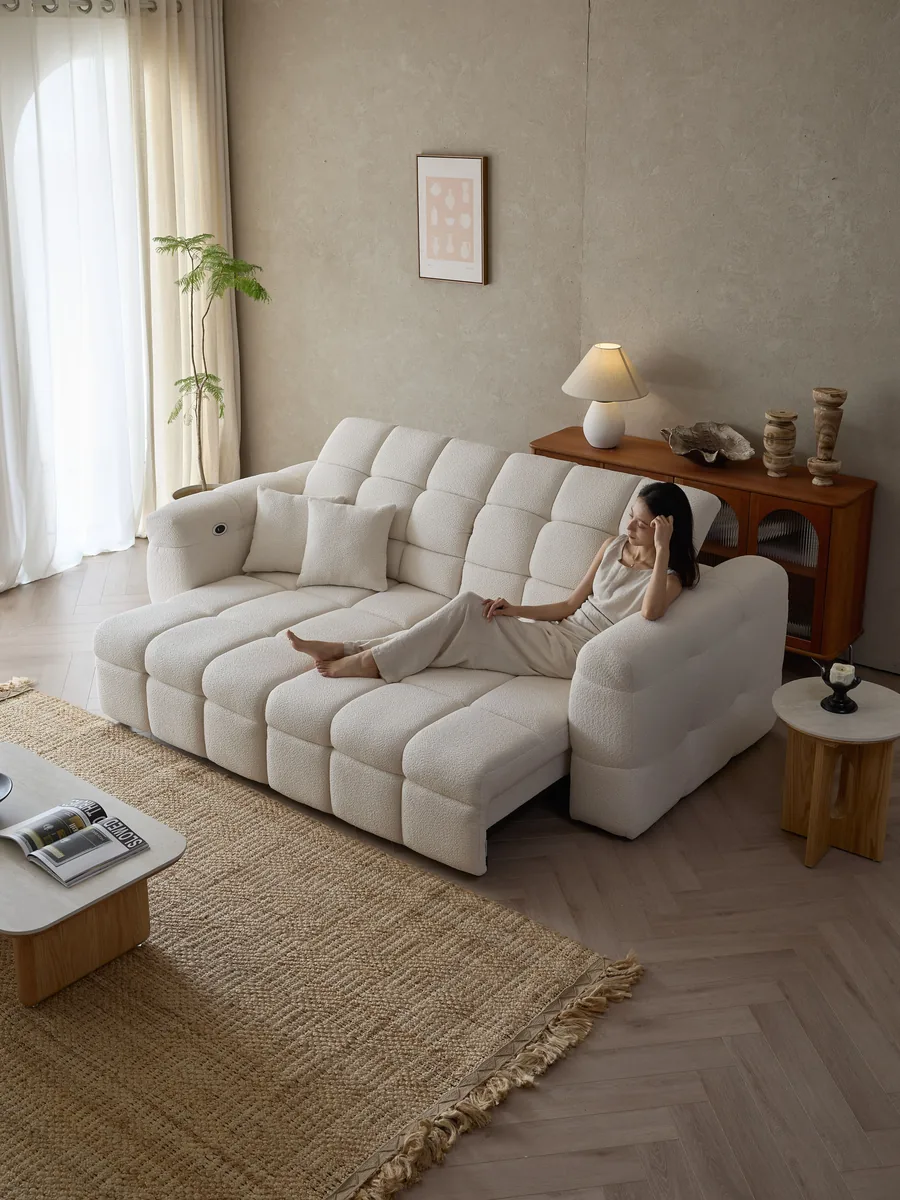
Then size the table to your sofa. The Aspen and Zomer come in 1.0, 1.1 and 1.2 metres, the Sova in 1.0, 1.2 and 1.5 metres, the Onze in 0.8, 0.9 and 1.0 metres, and the square Roku at 80, 90 or 100 cm. Measure the sofa first and leave room to walk around the table, and if your sofa extends or reclines, leave clear floor in front of the seat too. The Aspen, Roku and Zomer stand 35 cm high and the Sova 32 cm, so compare those figures with the seat height of your sofa.
For the end of a sofa or beside a bed, the Como and Toma side tables have a sintered stone top on a solid-wood base, 45 cm across and 51 cm high. The Cyrus is travertine, a natural stone, 40 by 40 cm and 50 cm high, and each piece has its own natural markings. Check those heights against the arm of your sofa. On wood or travertine, use a coaster under hot cups, and do not drop heavy objects onto travertine. You can see them all on our side and coffee tables page.
See it in person
Stone and wood are easier to choose with your hands than from a screen. Son&Bear has two showrooms in Malaysia, and both welcome walk-ins with no appointment. In Bangsar, we are at 100 Jalan Maarof, open from 11am to 8pm every day. In Kuching, we are at Galacity Prime, Jalan Tun Jugah, open from 10am to 7pm every day, where the Design Studio wall shows the wood finishes and table shapes. At either one, our team will show you the stone and wood with samples in hand. Bring your floor plan, and we will help you plan the table around your room.
Frequently asked questions
Is sintered stone the same as quartz or porcelain?
No. Engineered quartz is crushed quartz bound with resin, and the resin is what makes it less tolerant of heat. Sintered stone is fired without resin, so in the way it is made it is closer to porcelain, produced in large slabs for table tops and worktops. When you compare tops, ask which material you are actually looking at, because the names are sometimes used loosely.
Will a solid wood table warp in Malaysia's humidity?
Solid wood takes in and gives off moisture as the air changes, so it moves a little between humid days and air-conditioned evenings. Small movement is normal, which is why placement matters: keep the table out of strong direct sun and away from an air-conditioner blowing straight onto it. Wiping spills dry and re-oiling when the surface looks dry also help.
Which top is better with young children?
Sintered stone is the more forgiving surface for spilled juice, crayons and play dough, because it wipes clean. With toddlers around, corners matter as much as the surface, so a round or racetrack shape, with no square corners, is worth considering whichever top you choose. If you prefer wood, placemats under the children's plates will spare the top most of the marks.
How do I choose a sintered stone design?
Think about what will show. Plain pale stone shows sauce and spills until they are wiped, plain dark stone shows dust, crumbs and water spots, and a veined design hides most of both. Every Son&Bear stone design is the same sintered stone, so you are choosing the look, not the strength. A pattern reads differently across two metres than on a small sample, so see it in person before you decide.
What warranty comes with a Son&Bear dining table?
A dining table bought directly from Son&Bear comes with a 1 Year Limited Warranty covering manufacturing defects in materials and workmanship, in addition to your rights under the Consumer Protection Act 1999. It does not cover display, clearance or final-sale items, normal wear and tear such as scratches, dents, watermarks and food stains, or damage from misuse, harsh cleaning agents or hot objects placed on a wood top. Solid wood moving naturally with humidity is not treated as a defect, and the full terms are on our warranty page.